ClozeKB

A knowledge-graph audit of the Cloze help center, demo transcripts, and MCP docs.

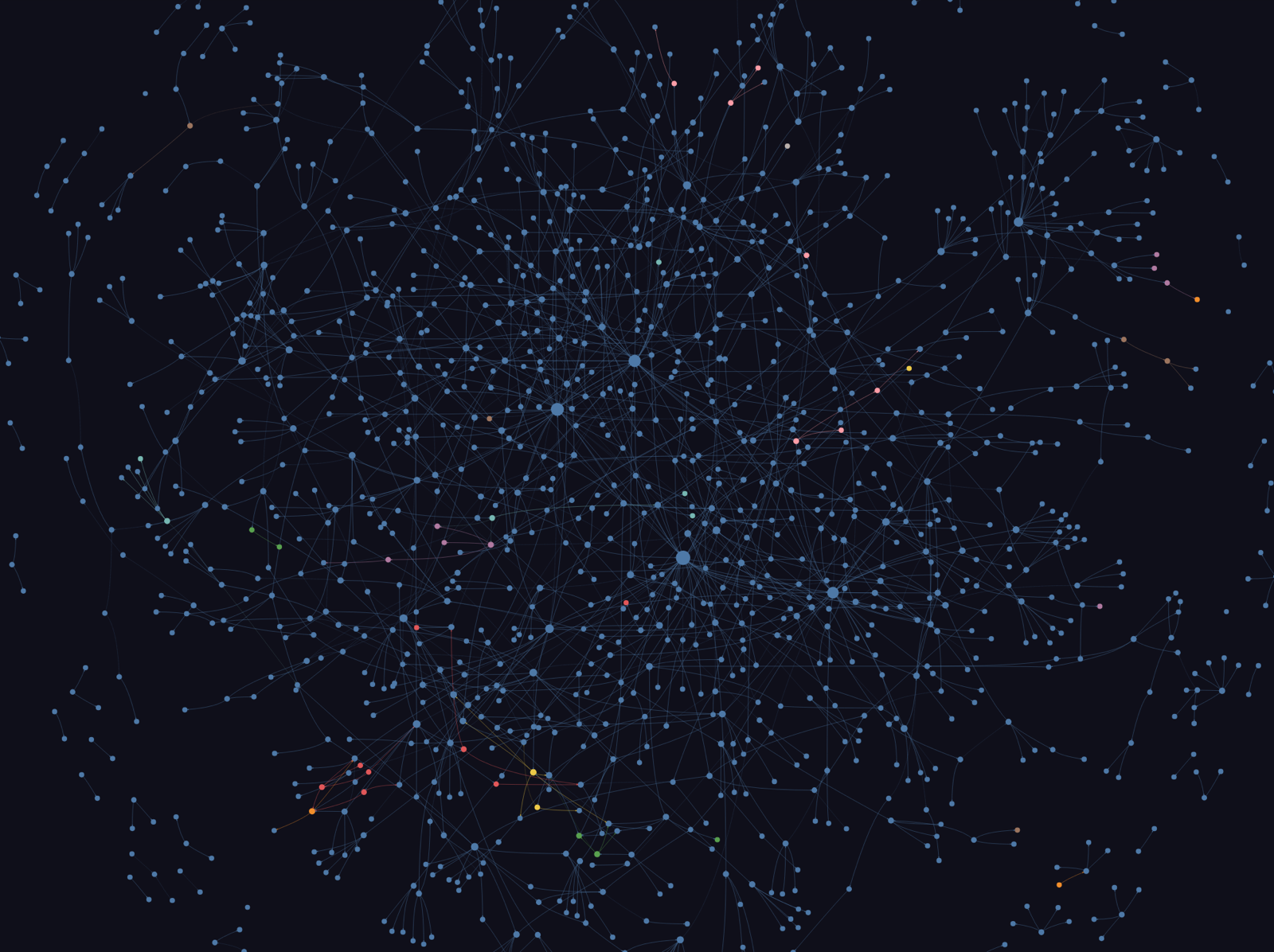
665 documents, 2,292 structured claims, 2,572 graph nodes across 291 clusters.

The build

What's in it.

The Cloze help-center knowledge graph: 2,572 connected concepts across 291 clusters drag to move · scroll to zoom · hover a node
2,572 concepts across 291 clusters. Live. Drag to move, scroll to zoom.

And an MCP layer on top, so an assistant can query the graph directly, not just look at it.

What the graph surfaced

Two things the graph caught.

You may already know both. The point isn’t the findings themselves; it’s that a graph surfaced them across 665 articles, the demo transcripts, and the MCP docs without anyone re-reading a word. I’m flagging them the way I would have from the inside.

Plan-gating is a quiet adoption-drift surface

The same eligibility sentence is hand-maintained across dozens of articles. When packaging shifts, each copy has to be found and changed by hand, and the drift leaves an agent unsure what they’re even allowed to use.

Verbatim count of the gating sentence by feature area, reproducible via grep over the corpus.

A safeguard can read as a limit

Some capabilities are documented by what they restrict, not what they enable. An agent reading “you can only mass-email strong relationships” meets a rule, not the deliverability protection behind it. The what travels through the docs; the why doesn’t.

The part I want to be honest about.

The way things ended stung. It was handled well and the reasons were real, but it still stung.

Here's my share of it. I knew things I didn't say out loud. When a brokerage asked for one thing and my gut said they needed something else, I usually went with what they asked for, because pushing back meant trusting my own read, and I didn't. Even when I did speak up, I had a hard time shaping what I saw into something the team could run with. When I wasn't sure how to answer something, I'd let it wait instead of getting ahead of it. None of that was about effort. The confidence just wasn't there.

Building these things is part of what changed that. It gave me a way to test my own thinking before I bring it to anyone, and to get what I see in front of people clearly. The rest was quieter, and harder to point at: time, distance, and some honest work on how I'd been getting in my own way. I trust my instincts now because I can finally check them, and because I stopped talking myself out of them.
The bigger picture

Where I think this is going.

Not a roadmap. Just the bets I'd make. You're probably already thinking about some of these, and that's kind of the point: so am I.

  1. Reach you rent is breaking. Reach you own is the business. Lead referral fees routinely run 30 to 40% of a commission, Zillow's are now the subject of a federal class action, and just weeks ago Chicago agents watched roughly 43,000 listings vanish from Zillow overnight when MRED cut the listing feed. Meanwhile the social and email feeds are filling with AI content and attention keeps retreating into group chats and small lists. When rented reach gets this expensive and this fragile, the only thing an agent truly owns is their relationships. Cloze already built the rooms this future needs: Segments, Stages, Tags, and Audiences let an agent reach into them and make each message personal. That isn't drip marketing. It's being personally present at scale, which has been the Cloze ethos all along. That's the shift: the CRM becomes less a system of record and more a context engine, the place an agent reaches out from, not just the place they look things up.
  2. The architecture bet is about to pay off, again. Apple and Google are moving serious AI onto the device, especially on phones. When AI does run in a CRM today, it almost always runs in the cloud: every insight a round trip with someone's client data in it and a metered bill attached. As that compute moves on-device, the architecture that already keeps each user's data in its own isolated store is the one positioned to meet it. Cloze made that bet over a decade ago, while everyone else pooled tenants into one shared database. That isolation means each agent's world is already a self-contained unit, the shape an on-device model can reason over without untangling one customer from the rest. Run more of the intelligence right there and the privacy story sharpens from “your data doesn't train anyone or get sold” to “the AI can work without it ever leaving the device,” a real chunk of inference cost comes off the metered cloud, and the everyday actions get fast.
  3. Make the records the brokerage owns worth owning. So much agent data is half a contact: a name and an old email, or a spouse's phone on the wrong record. The Connected Brokerage already names the orphaned-client problem. The next step is making those records worth reassigning: opt-in enrichment at the brokerage level, run on contacts the brokerage already owns, before an orphaned client is reassigned or a site lead is routed. The agent's data stays the agent's. The brokerage's data starts pulling its weight. And generating revenue.
  4. A brokerage-aware adoption assistant. I built a public AI that web-searches a visitor's company and answers in context. The same pattern could give each brokerage a first-layer assistant that knows their config and their plan, so an agent gets “yes, you have that, here's how” instead of a help article. This one I can show you working today.
Why I'm showing you this

The graph is one demonstration of a bigger system.

I built it over the months since. It runs on the same local-first, single-source-of-truth instinct you already know, turned on my own work: a self-maintaining knowledge base, a fleet of specialist agents, automations that run unattended, and a private local model for anything sensitive. The Cloze graph above is just the piece I pointed at you.

See the system that produced it →

I spent a long time not trusting what I saw. This is what it looks like when I do.

If any of it's useful to you, it's yours. Either way, I'm glad I made it.

Connor